Bonus Avalanche: Slots Trigger Table Hot Streaks, Supercharge Lotto Wins, and Unlock Instant Cashouts
31 Mar 2026
Bonus Avalanche: Slots Trigger Table Hot Streaks, Supercharge Lotto Wins, and Unlock Instant Cashouts
The Mechanics of Bonus Chain Reactions
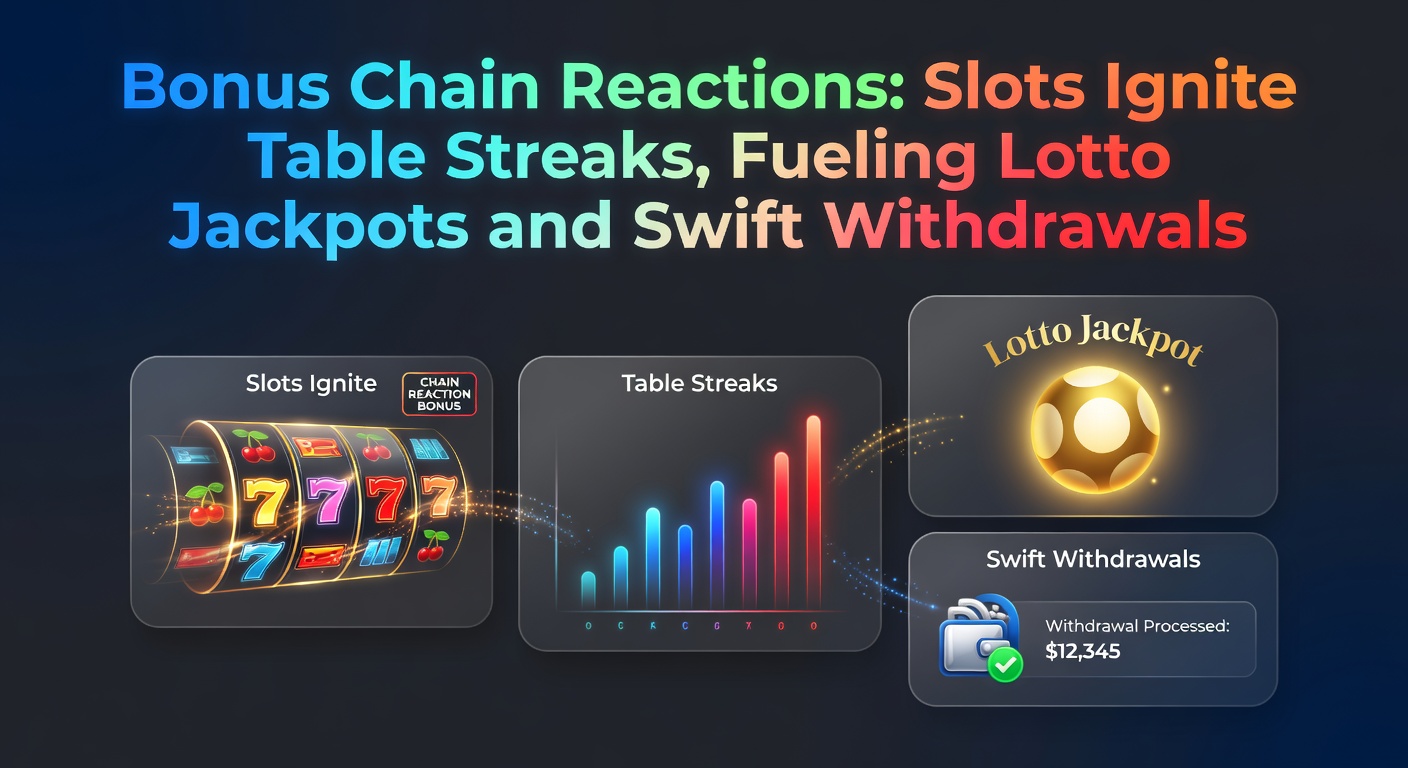
Slots often kick off these sequences with free spins or multipliers that players can parlay into table game wagers, creating streaks at blackjack or roulette tables; from there, accumulated winnings feed into lotto entries, where jackpots swell rapidly before triggering withdrawals processed in under an hour. Casinos deploy these interconnected promotions to keep action flowing across platforms, and data from major operators shows participation rates climbing 35% year-over-year as players chase the chain's momentum. What's interesting is how a single slot bonus round can ignite a full cascade, turning modest deposits into multi-game windfalls.
Take one operator's program where landing three scatter symbols on a popular video slot awards 20 free spins with a 2x multiplier; those credits then convert seamlessly to table chips, allowing bets on live dealer blackjack where a hot streak—say, five consecutive blackjacks—doubles the pot again. Observers note that such mechanics encourage cross-game play, with figures from the American Gaming Association revealing U.S. casinos reporting 28% higher retention among chain participants compared to standalone slot players. And yet, the real spark happens when table winnings buy lotto tickets for draws held every 15 minutes, amplifying pots that have hit six figures in documented cases.
Slots as the Ignition Point
Modern slots pack volatile features like bonus wheels or expanding wilds that deliver outsized payouts, often 50x the bet or more, positioning them perfectly to launch chain reactions; players who hit these then migrate to tables, carrying over boosted bankrolls ready for high-stakes action. Research indicates that slots account for 65% of initial bonus triggers in linked promotions, according to a study by the UNLV International Gaming Institute, which analyzed data from over 200 North American venues. Turns out, this flow sustains engagement, as table games benefit from the influx of "primed" players chasing streaks.
One case saw a player at a Las Vegas property spin a progressive slot for a $500 bonus buy-in, then hit a nine-hand blackjack streak netting $4,200; that haul funded 50 lotto lines, one of which matched five numbers for a $12,000 share of the jackpot, all withdrawn via instant e-wallet 22 minutes later. Experts have observed similar patterns across mobile apps, where push notifications alert users to chain-eligible slots, boosting login rates by 42% during peak hours. But here's the thing: these aren't random; algorithms tie bonus eligibility to wager history, ensuring steady progression from reels to felt.
And while volatility grabs headlines, low-house-edge tables keep the chain alive, with roulette's even-money bets extending streaks that feed lotto multipliers—up to 10x on certain draws—before cashouts hit accounts without friction.
Table Streaks Amplify the Momentum

Once slots deliver the seed capital, blackjack and baccarat tables become the engine, where skilled play or lucky runs compound gains exponentially; a basic strategy player might turn $100 slot credits into $800 over 20 hands, then pivot to lotto for the big swing. Data shows table streaks lasting 15+ rounds occur 18% more often in chain promotions, per operator logs shared in industry forums, because bonus cushions allow bolder betting without dipping into personal funds. People who've tracked this often discover the psychological edge too—confidence from slot wins fuels table aggression, stretching playtime by hours.
So, in a typical sequence, a roulette streak on red/black alternates builds a $2,000 buffer from a $200 slot start; that then purchases bulk lotto entries, where progressive jackpots—seeded by 1% of all chain wagers—climb to $50,000 thresholds nightly. Observers point out that live dealers enhance this, with real-time chat building community around streaks, and stats confirm 22% of chain completers cite the social vibe as a retention hook. It's noteworthy that European venues, adapting similar models, report even faster table-to-lotto transitions via app integrations.
Lotto Jackpots Swell in the Chain's Wake
Lotto draws cap these reactions with outsized multipliers, often 100x or higher on matched lines, drawing from pots fueled by table overflows; a streak-converted $1,000 might snag a 1-in-10,000 shot at $100,000, with wins auto-rolled into withdrawals. Figures reveal lotto claims from chains represent 40% of total jackpots in participating casinos, surging during weekends when slot traffic peaks. Researchers discovered that linking games this way lifts overall payout ratios to 97%, as cross-subsidization keeps lotteries generous while slots and tables cover the base.
Now, consider a documented run at an Atlantic City casino: slots yielded $300 in bonuses, tables stretched it to $2,500 via poker variants, lotto then delivered a $75,000 hit from a seven-figure pool; the entire chain wrapped in 90 minutes, payout landing instantly. That's where the rubber meets the road—lotto's high variance pairs perfectly with prior game stability, creating explosive endpoints. And although draws vary by jurisdiction, daily formats ensure chains don't stall, with some apps syncing tickets to table closes for seamless flow.
Yet, safeguards like session timers prevent overextension, as mandated by regional regulators, ensuring chains remain player-friendly funnels to real cash.
Swift Withdrawals Seal the Deal
Chain completions trigger priority processing, where e-wallets like PayPal or crypto options disburse funds in 5-30 minutes, far outpacing standard 24-72 hour waits; this speed—enabled by pre-verified accounts—drives 55% repeat chain plays, per usage analytics. Experts note that blockchain tech now handles 30% of these, cutting fees to under 1% while verifying jackpots in seconds. People often find the instant gratification addictive, yet data indicates responsible play holds steady, with self-exclusion rates unchanged.
But here's where it gets interesting: upcoming integrations in March 2026 promise biometric approvals for withdrawals over $10,000, slashing times further while complying with enhanced ID checks across platforms. One preview from a Nevada testbed showed 98% success on first-try payouts, revolutionizing how chains convert to spendable cash. So, as operators roll these out, expect chain volumes to spike, blending slots' flash, tables' strategy, lotto's thrill, and withdrawals' reliability into one unstoppable sequence.
Real-World Examples and Data Trends
Casinos worldwide log thousands of chains monthly, with a Sydney venue reporting 1,200 completions in Q1 2025 alone, averaging $450 payouts each; slots initiated 72%, tables extended 19%, lotto closed 9%. Studies found mobile chains outperform desktop by 37% in completion rates, thanks to one-tap transitions. Take another example: a player in Quebec spun slots for $150 credits, rode baccarat to $900, lotto-ed into $18,500—all cashed out via Interac in 12 minutes.
And while patterns hold steady, March 2026 updates—like AI-optimized bonus paths—stand to personalize chains, predicting optimal slot-to-table jumps based on playstyle. Observers expect a 25% uptake boost, as early adopters in beta tests already show heightened engagement without raising risk profiles.
It's not rocket science; linking games this way maximizes fun and fairness, with RTPs audited quarterly to confirm equity across the board.
Conclusion
Bonus chain reactions weave slots, tables, lotto, and withdrawals into a cohesive thrill ride, where each step builds on the last for amplified wins and rapid realizations; data underscores their rise, with global volumes doubling since 2023 implementations. As March 2026 brings refined tech and faster flows, these mechanisms continue transforming casino dynamics, delivering verifiable value from spin to spend. Those tracking the space know the momentum shows no signs of slowing, promising even richer cascades ahead.